
We need to create a functioning environment, not just square meters
With a new strategy, fresh branding, and a new office, DVM is strengthening its market presence. The company, which has been in operation for over thirty years, aims to present its integrated service model in a simpler and more visible way, while seeing significant growth opportunities in the hotel and residential property markets. We spoke with András Vissy, the Sales and Marketing Director of DVM, about the background of this renewal, changes in the office market, the appreciation of the Design & Build model, and new technologies shaping the construction industry.
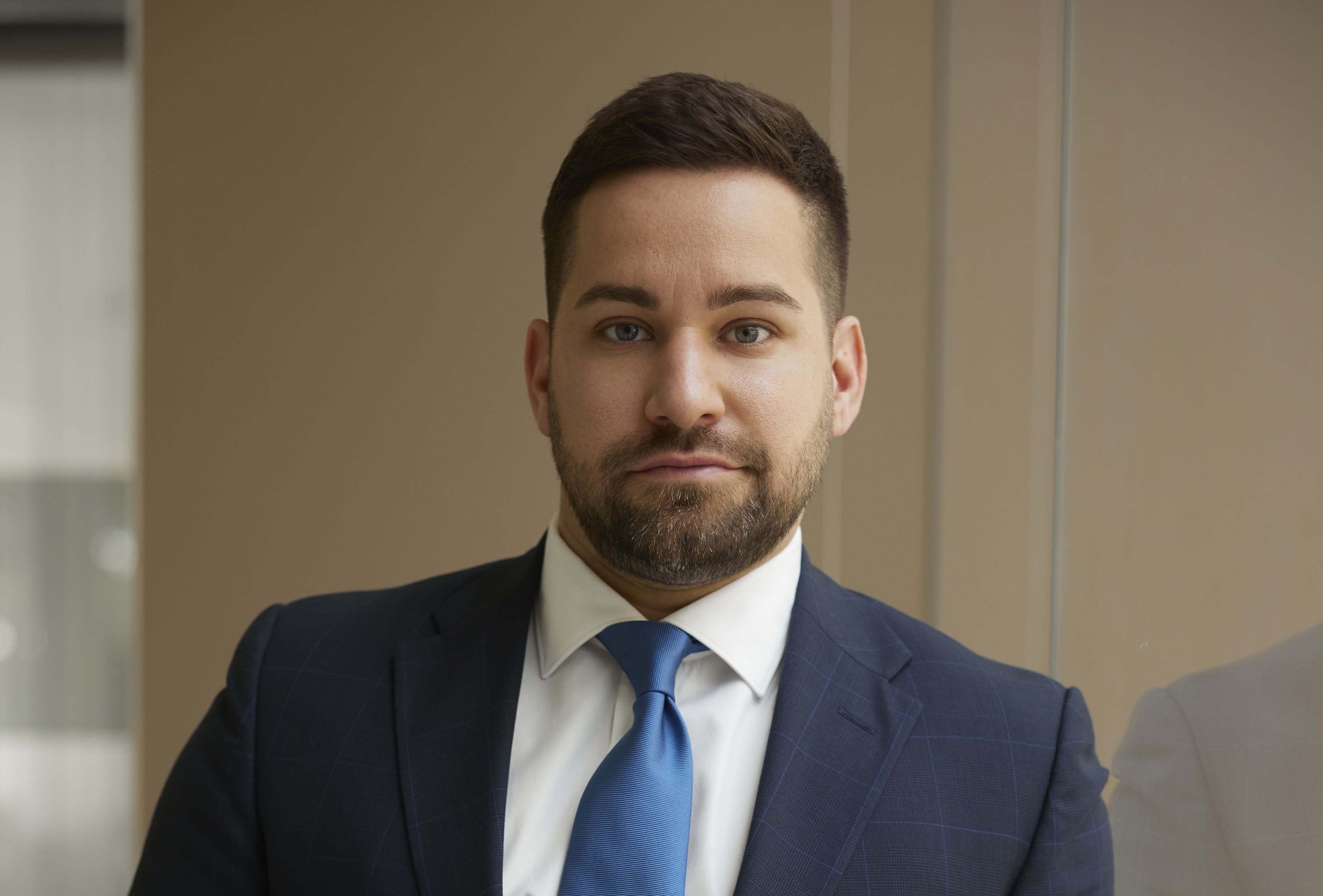
DVM entered the market this year with a new strategy, fresh branding, and a new office. From a sales and marketing perspective, what does this renewal mean: is it more about making the brand more visible, or is it a deeper business shift?
The renewal does not signify a business shift; its goal is to ensure that DVM's visual appearance accurately reflects the comprehensive professional knowledge and cross-industry experience that has kept the company at the forefront of the market for over three decades. As the provider of the most complex integrated architectural and construction services in our country, we manage the entire project lifecycle in a coordinated manner, from articulating needs to planning and turnkey handover. The new strategy and branding serve to communicate this diversity in a simpler, more transparent way. It was important for us to clarify to the market what value we can provide throughout a project's entire lifecycle and how we can be present as a partner in various industries.
The name DVM has always been strongly associated with complex, integrated architectural and construction services. How can this complex knowledge be communicated simply and understandably in a market where clients are looking for quick, transparent, and predictable solutions?
One of our key realizations is that clients do not need to understand the complexity of our services but rather what advantages this complexity brings them. Communicating the complexity of design, construction, the Design & Build model, and related technical knowledge can be challenging; however, it is easy to understand that an integrated team means less uncertainty, faster decisions, and clearer accountability. DVM professionals can manage the entire process of a project in a coordinated manner, resulting in quicker decision-making and predictable implementation.
If I understand correctly, the focus of your communication is not on listing our services.
That's right, as it is much more important to show what we take off the client's shoulders. In a complex investment, coordinating the various stakeholders, decisions, costs, and deadlines is often the biggest challenge. The value of DVM's integrated operation is that we manage these processes not as separate parts but as a single system. This approach can be most authentically demonstrated through specific projects. The Andor Liget Residential Park, the W Budapest Hotel, the Europe Experience Center, and the development of Dr. Rose Private Hospital are all investments with very different functions and scales. What they have in common is that they required high architectural quality, complex technical coordination, and predictable implementation simultaneously.
The new sub-brand system — such as DVM Office, DVM Hotel, DVM Logistics, or DVM Healthcare — shows that the company is active in very different sectors. In which areas do you currently see the strongest growth opportunities?
In recent years, we have consciously built the professional background that allows us to be relevant partners in multiple sectors. The primary goal of the new sub-brand system is transparency. A client in an office, healthcare, or hotel project comes with different expectations, so it is important that we can communicate in the specific language of each sector. Currently, we see the greatest growth potential in the hotel and residential segments. The recovery of tourism is already noticeable, and this can clearly boost the hotel market. Our projects in hotel development, such as the W Budapest Hotel in the Drechsler Palace, The St. Regis Budapest in the Klotild Palace, and the renovation of the Danubius Anna Grand Hotel, illustrate this well. On the residential side, our own developed Andor Liget, which has since been purchased by the ERSTE Open-End Real Estate Investment Fund, and the DUNA Terrace Vista, being realized with DVM's general contracting, also show that residential projects today must simultaneously create architectural quality, market rationality, and well-functioning layout logic.
In the office market, tenant thinking has changed significantly in recent years: hybrid working, ESG, energy efficiency, and employee experience have all become important considerations. What do office clients request differently today than they did five years ago?
The office is no longer just a place of work; it is also an important tool for corporate culture and employee experience. It is part of the strategy. It impacts corporate culture, employee experience, and retention. Clients today are looking for spaces that support hybrid working, personal meetings, and collaboration. As a result, communal spaces, flexibly adaptable spaces, and solutions that can adapt to changing work methods in the long term have gained importance. Additionally, energy efficiency and sustainability considerations have also become fundamental expectations. A modern office today is not only an aesthetic choice but also an operational and long-term business decision. Our experience shows that many offices are not effective because their designs try to impose a single logic on all teams. In contrast, different fields work at different rhythms, with different tool needs and concentration levels. A uniform, undifferentiated open office rarely serves this well. Therefore, DVM's workplace perspective thinks in terms of zoned hot desk systems. The essence of this is that the space is flexibly usable while being built on clearly defined work zones, adapting to the actual functioning of each team. Focus work, phone calls, collaboration, document management, and community presence all require different spatial usage.
In the Budapest office market, the vacancy rate decreased to 12 percent in the first quarter of 2026, while renewals and more cautious decisions continue to play a significant role in tenant activity. Does DVM perceive this environment more as an opportunity or a challenge?
The office market is transforming, and flexibility is needed to adapt to the changes. The scope of classic office developments is narrowing, and larger projects are also missing from the fit-out market, but this area remains significant in the company's life. This is well illustrated by our projects where we had to respond precisely to user needs and long-term operation, such as the Nestlé office, the transformation of the Ericsson headquarters, or the leasing projects related to Szervita Square. Modernization, as well as the potential for adaptability and diverse usage, is currently very prominent, and most of our commissions are focused on this.
One promise of the Design & Build model is that the client receives design and construction in one hand, in a coordinated manner. In the current construction environment — with cost pressure, deadlines, and labor market challenges — how has this model been valued?
The value of the Design & Build model is even more evident in an uncertain market environment. Coordinating costs, deadlines, and technical decisions is much more efficient when the design and construction processes do not operate independently of each other. Since one company holds the entire process, reactions are quicker, processes are more transparent, risks can be managed more effectively, and it is easier to find the optimal balance between costs, quality, and deadlines. And one more aspect that may be important to clients: this also makes accountability easier.
According to DVM's announcement, sustainability, new construction technologies, and artificial intelligence could fundamentally reshape the industry. Which of these do you think will have the most significant impact on design, construction, and client relationships in the coming years?
It is likely that no single factor will determine the future of the industry, but rather their interactions. Sustainability is already a fundamental expectation today, and new technologies provide opportunities to work more efficiently, accurately, and with fewer resources. Artificial intelligence is particularly interesting because it can bring changes to many processes, from design to project management. However, technology can only create real value when paired with appropriate professional experience and human decision-making. At DVM, a dedicated AI working group is addressing these issues.
As the Sales and Marketing Director, you simultaneously have insight into the market, client needs, and DVM's brand building. What goals have you set for the upcoming period: new sectors, new client types, greater visibility, or even regional expansion?
One of the most important goals for the upcoming period is to make DVM's professional knowledge and complex service model known to a wider audience. We aim to become a recognized, strong professional brand at the regional level as well. The new office and the new branding support this. We want to showcase a DVM that builds on over thirty years of experience while preparing for future technological, sustainability, and market challenges.
Source: https://www.irodakereso.hu/cikkek/interjuk/nem-negyzetmetereket-hanem-mukodo-kornyezetet-kell-teremteni