
Reference · Beyond
Winehub
A new gastronomic and cultural meeting place in Óbuda
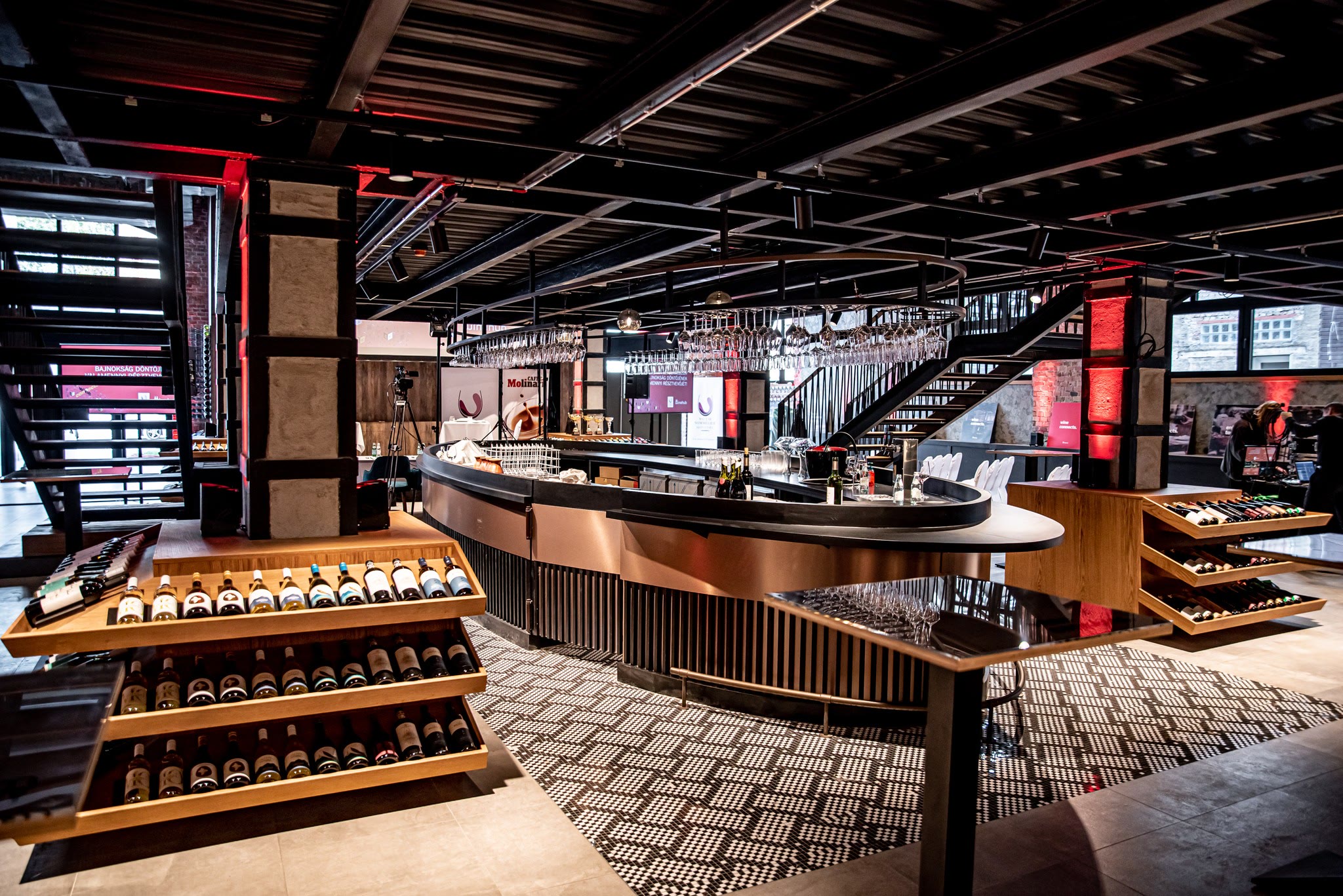
Winehub, a new wine centre, has opened its doors in the heart of Óbuda, Budapest. A much-needed concept has been brought to life within Hungary’s wine community: Winehub is not only a large-scale wine centre, but also a community platform. Its aim is to create a distinctive meeting place for representatives of both well-known and lesser-known wineries, wine lovers and industry professionals alike, thereby contributing to the development of Hungarian wine culture and gastronomy.
We first visited the site of the former Goldberger factory in May 2021, when we walked through the already vacated car repair workshop. At that stage, the space carried all the marks of industrial romance: abandoned inspection pits and overhead trolleys, crane tracks and oil-stained floors. Even then, the client, Carlos Coelho, shared his grand vision with us: to create a cult destination unlike anything else in Budapest.
Carlos is of Argentine origin, but is equally at home in California and Hungary. Under his leadership, Haraszthy Winery became widely recognised; he fully renovated the winery and opened the Matador restaurant. Carlos Coelho’s ambition is to work with an international team of chefs to present exciting flavours worthy of visitors’ attention throughout the day — whether at the winery or now in Budapest.
Winehub’s slogan, “wine connects”, carries a symbolic message that reflects the mission the venue seeks to fulfil. Hungarian wine culture and the country’s wine-producing regions have undergone remarkable development in recent years. Varieties such as Bikavér, Furmint and even Irsai Olivér have won over wine enthusiasts both at home and abroad. Winehub aims to broaden this palette and introduce audiences to wineries that may not yet have received wider attention due to geographical distance or other reasons. This will be built around continuous, everyday tastings at the large oval tasting counter located at the heart of the venue.
A defining source of inspiration for the design was the industrial heritage of the location, as the site once belonged to the Goldberger factory. The history of the renowned Goldberger Textile Factory began in 1785, when Ferenc Goldberger founded his blue-dyeing workshop on what is now Lajos Street. The steadily growing textile works were later led by his son, Sámuel Goldberger. From the 1920s, Leó Goldberger continued the company’s rise, and under his leadership it entered its golden age. However, the history of both the family and the factory took a tragic turn when the socially respected owner was deported to a concentration camp, where he died just days before liberation. Three years after the Second World War, the factory was nationalised and continued to operate first as Goldberger Textile Printing and Finishing National Company, and later as BUDAPRINT Cotton Printing Company. The latter went bankrupt in 1989, although its final liquidation only took place in 1997.
We wanted to preserve and honour the imprint of this past. In the castle-loft inspired interior, textile impressions can be seen in places, pressed into the skim-coated wall surfaces. The same textile motif is echoed in the mosaic flooring, which follows a carpet-like pattern. One of the project’s defining features is its industrial-loft atmosphere, expressed through the building’s existing internal brick walls, black steel structures and exposed concrete elements. The “castle” character was introduced through the owner’s existing decorative pieces: heavy curtain fringes, crystal chandeliers, brass elements and carefully placed contrasts evoking the world of historic residences, lending the venue its distinctive patina.
The building section accommodates three main functions: a wine and spirits store, a bistro-style bar and restaurant, and a fine dining restaurant. The basement also serves as a tasting room and event space. The steel-structure gallery level is entirely new and houses the tasting rooms, which can also be used as meeting rooms for events and sommelier training sessions. At the centre of the gallery level, a large glass box appears to float within the space, projecting cantilever-like into the retail area. The two parallel staircases further enhance the dramatic effect while ensuring circulation on the gallery level. Every wall and column surface has been utilised; the owner is continuously expanding the bottle stock, with 5,000 to 6,000 bottles expected to be available on site in the future.
In the retail space, we collaborated with US-based manufacturer VintageView, which supplied the special wine racks that serve both as furnishings and installation elements within the store.
Thanks to its location, the venue has the potential to become one of Budapest’s new cultural destinations, with a strong focus on both gastronomy and cultural events. At the beginning of the design process, we examined the building’s surroundings and its built context. The small street next to Winehub is well suited to hosting atmospheric bistros, cafés and artisanal creatives, bringing new life to this industrial zone. Film production companies have already discovered the area, recognising its potential, and several of them are now headquartered here. We believe that in the near future, one of Budapest’s new meeting and leisure destinations may emerge here — with Winehub at its heart.
Gallery
More Beyond projects
Hungaroring
Beyond · 2025
Hard Rock Café Budapest
Beyond · 2011
TODO Restaurant Renovation
Beyond · 2025
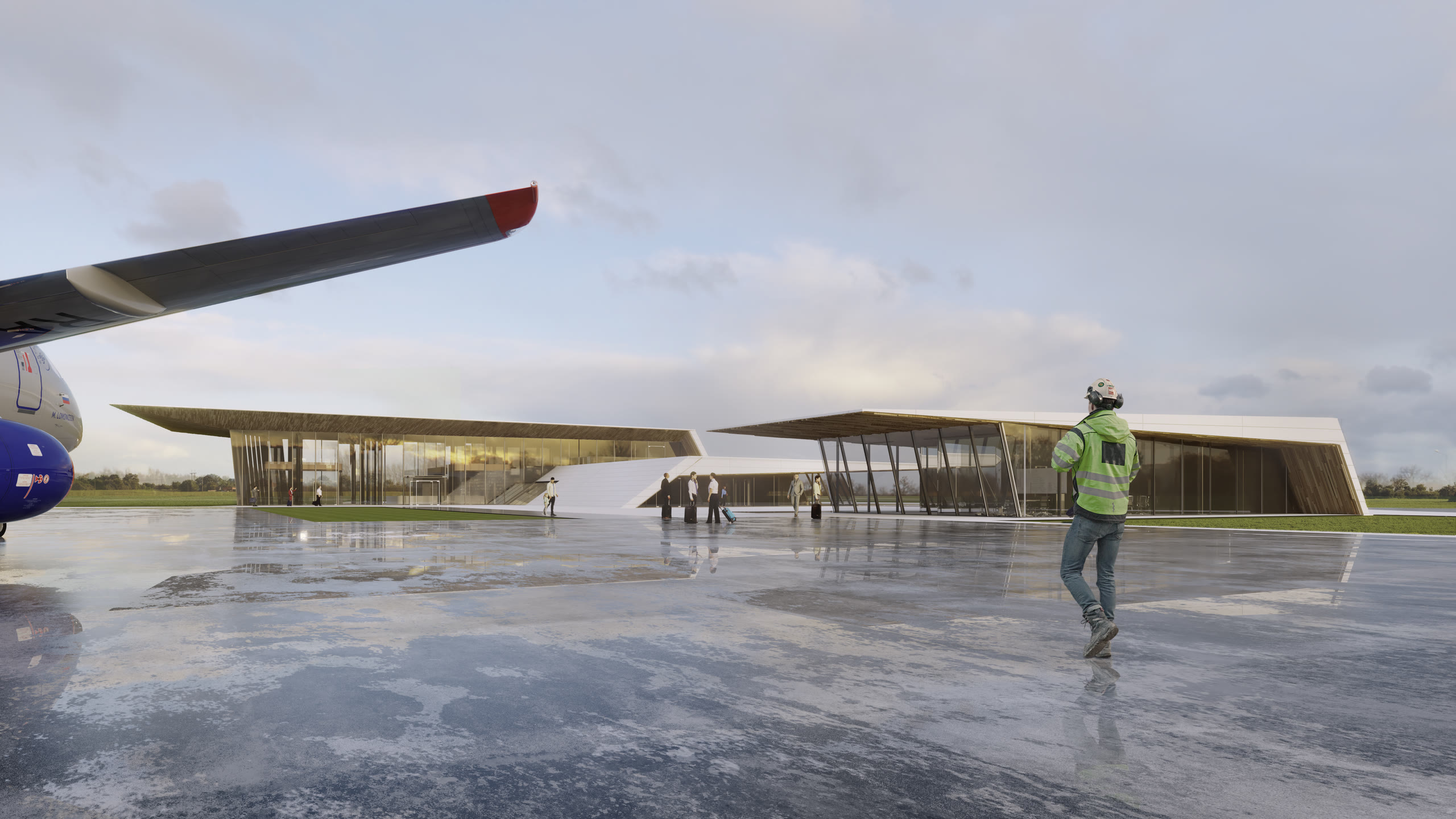
Debrecen Airport Design Competition
Beyond
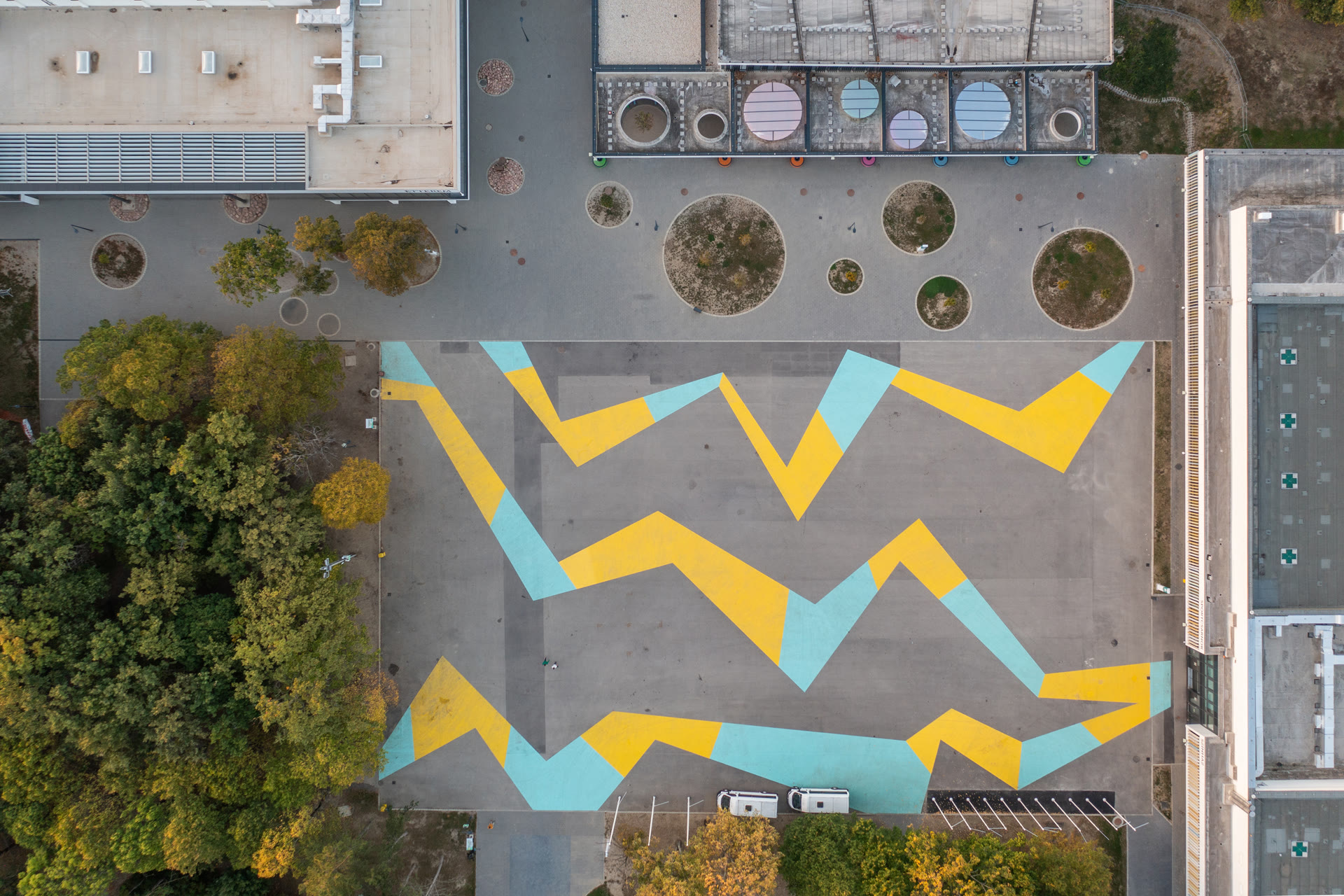
Zánka Erzsébet Camp Renewal
Beyond · 2022
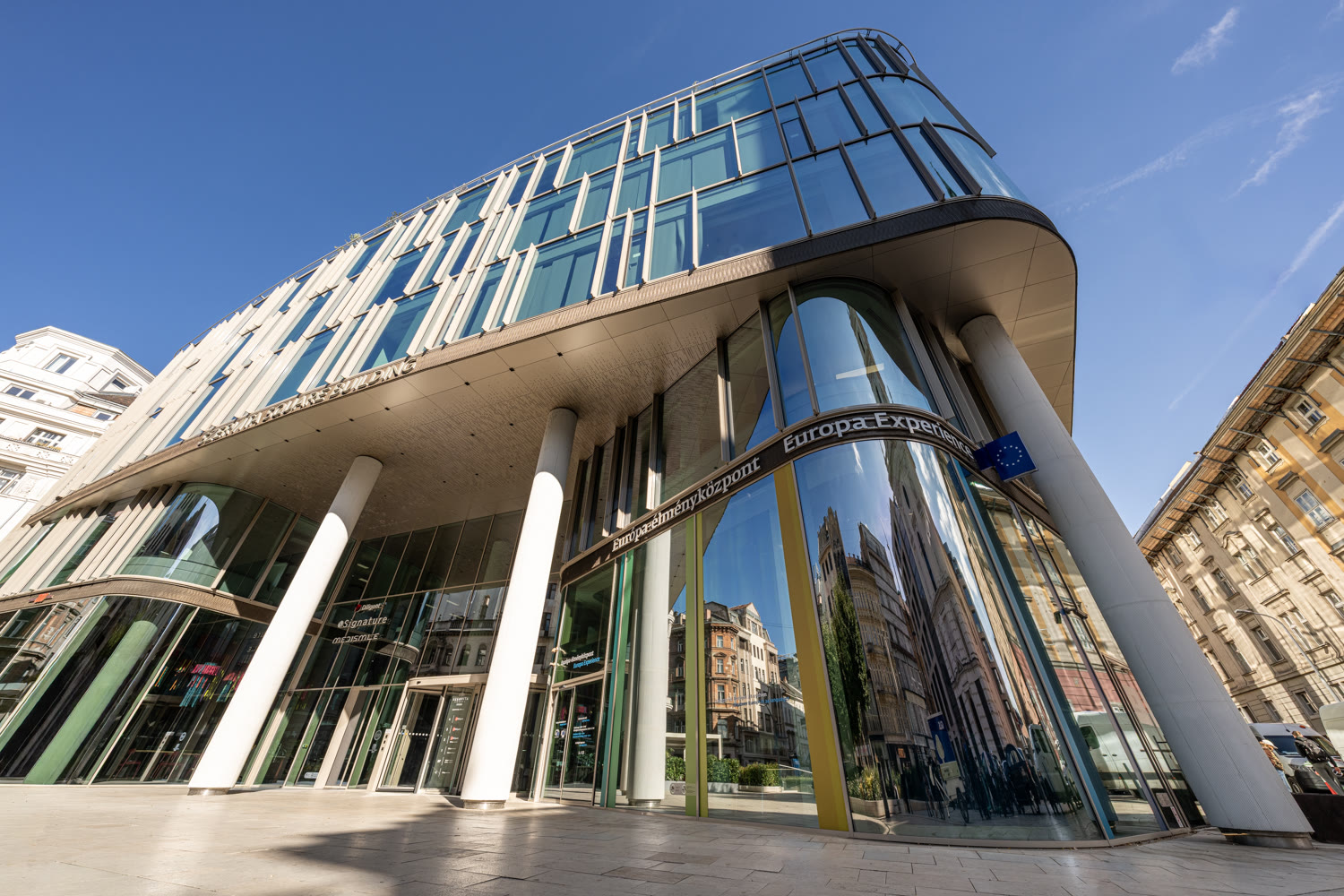
Europe Experience Centre Budapest
Beyond · 2025
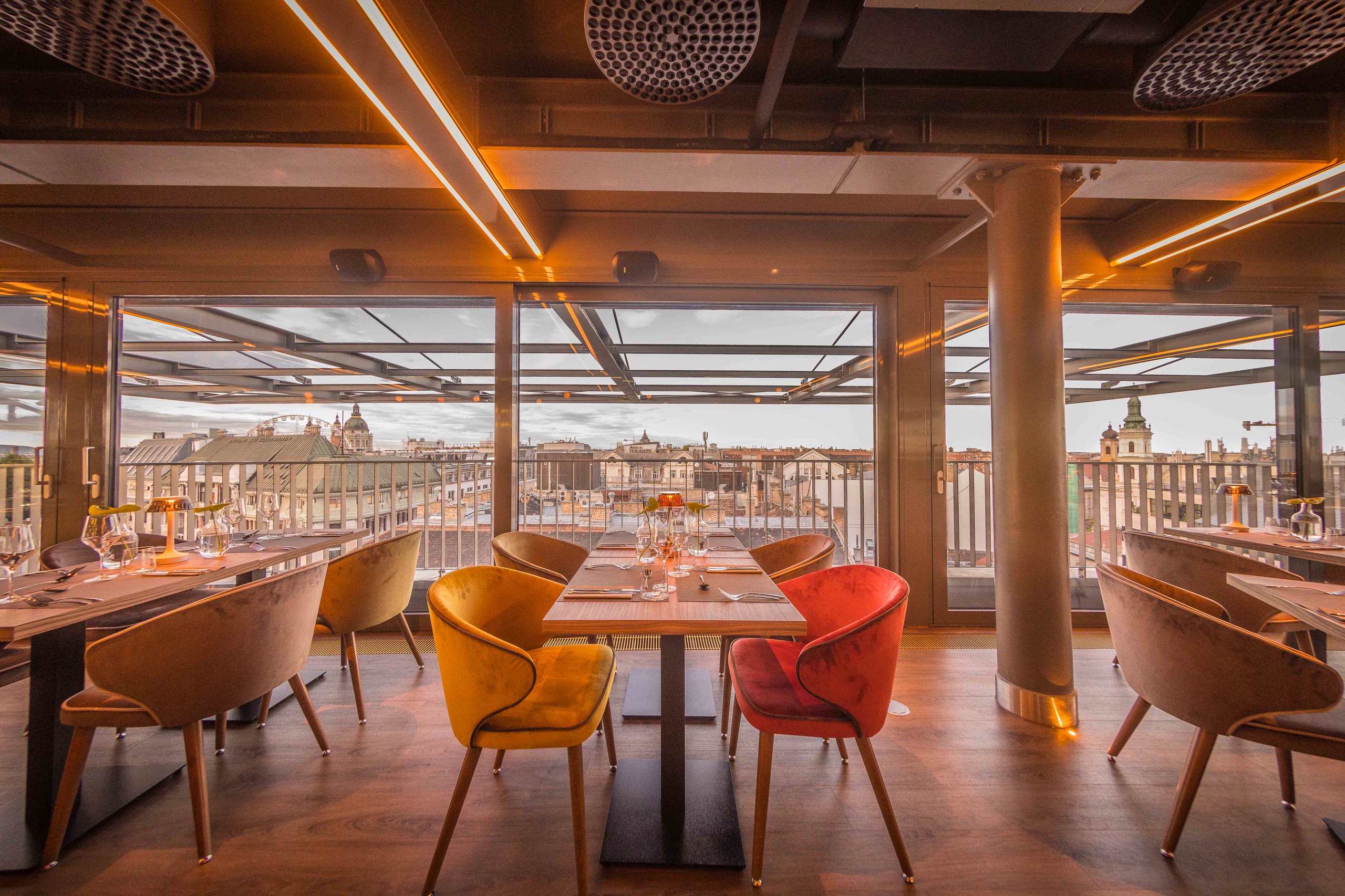
St'Andrea Wine & Skybar & Restaurant
Beyond · 2015
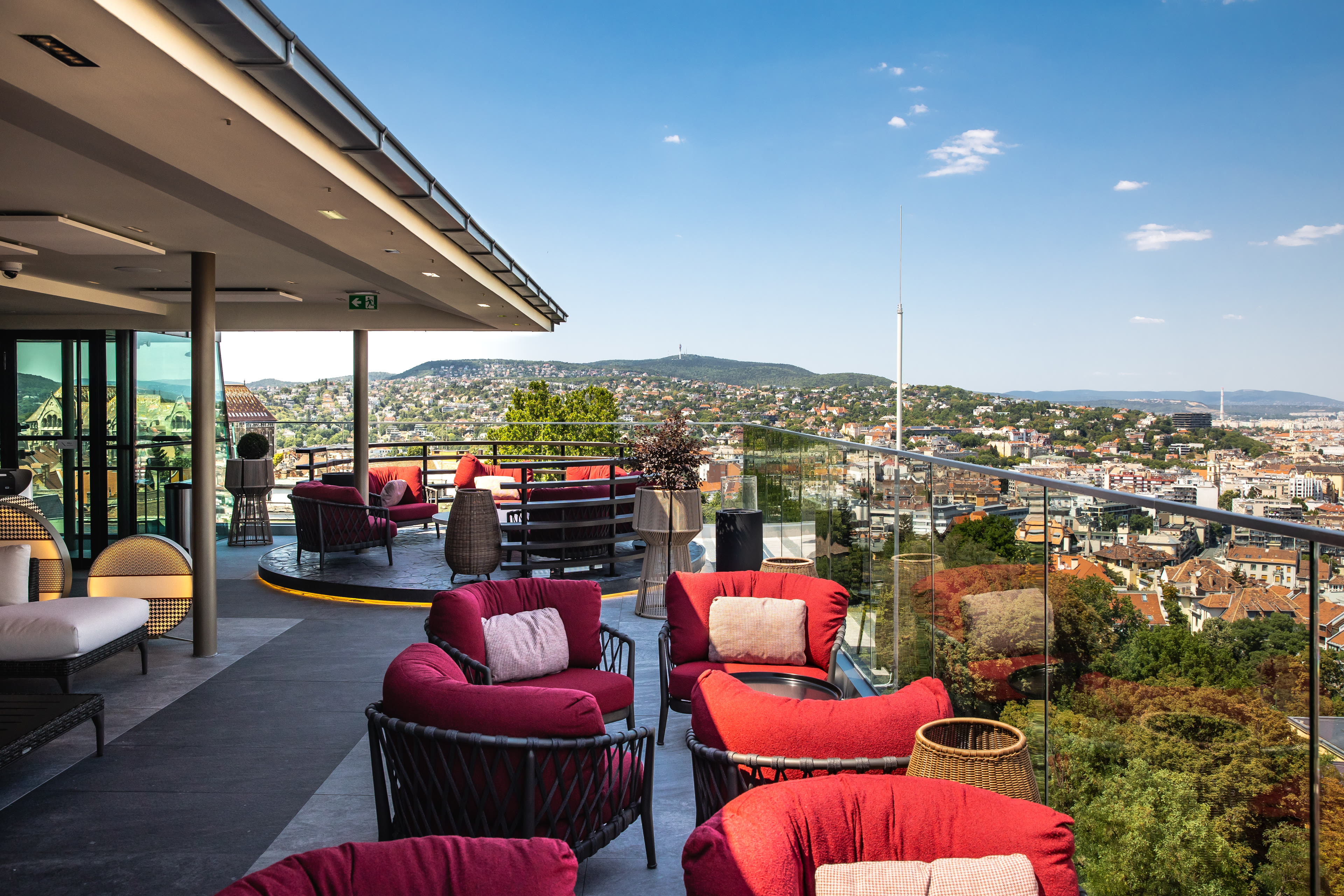
White Raven Skybar & Lounge
Beyond · 2021
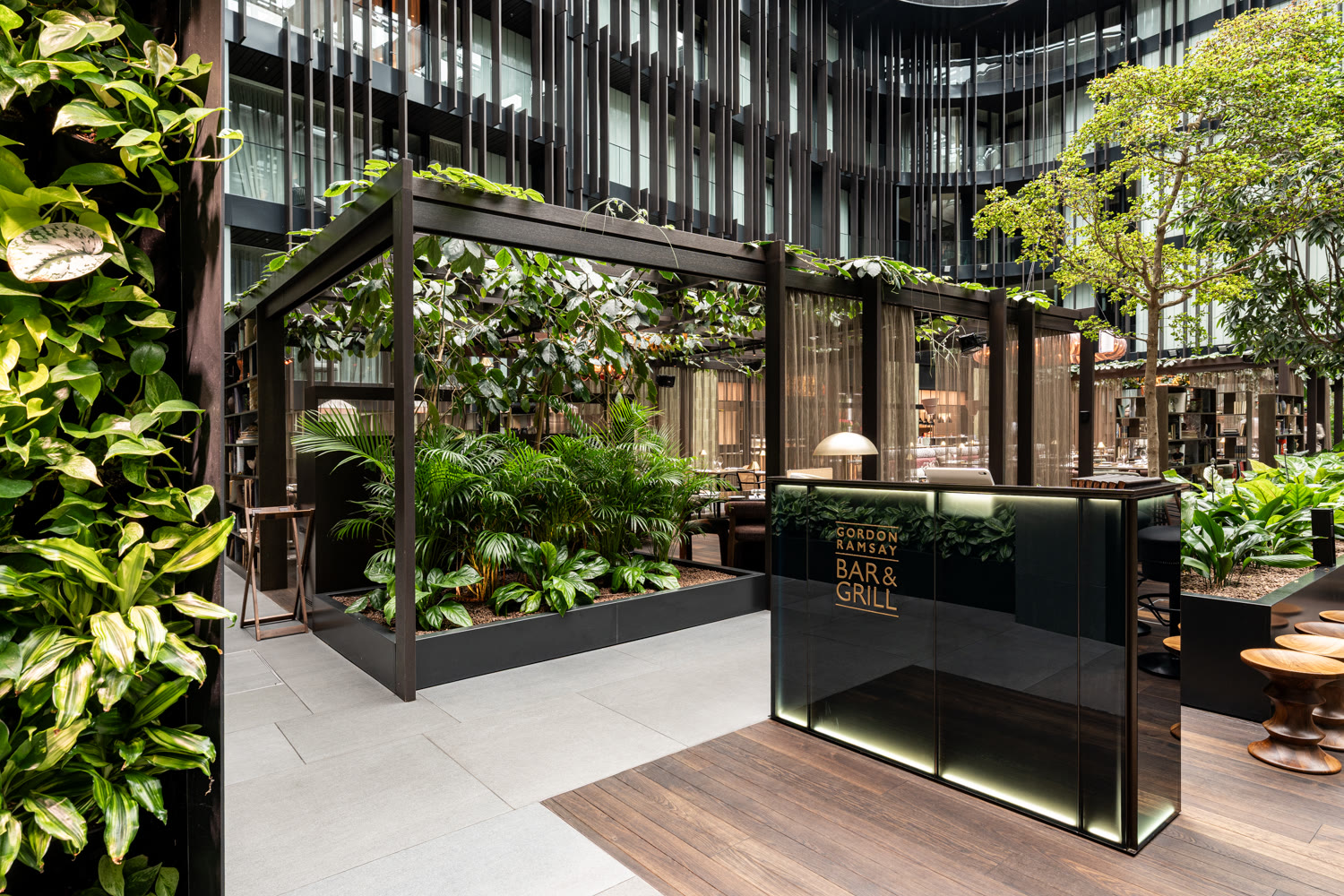
Gordon Ramsay Bar & Grill Budapest
Beyond · 2026
Explore the Beyond sector
See how we shape spaces across this sector.